
Texas County Parole Versus Probation
A person can live in Texas County after release yet remain under several different forms of legal supervision. Probation usually stems from a sentence imposed by the court. It may allow the person to remain in the community without first serving a prison term. Parole follows incarceration and reflects a release decision under Missouri law and Parole Board authority. Conditional release also follows confinement, but its basis and timing differ from parole. Each status can carry rules, reporting duties, and a supervising officer.
The Texas County Jail records the local booking and the movement out of its building. It does not determine or maintain the current reporting status of a Missouri parolee or probationer. The Missouri Department of Corrections Division of Probation and Parole supervises the active community case. The Missouri Parole Board makes parole-related decisions. That division of authority matters when a person is no longer on a jail record but still appears in the state system.
| Status | How it begins | Best verification source |
|---|---|---|
| Probation | A court orders community supervision, sometimes instead of prison | Missouri DOC active search, field office, and court judgment |
| Parole | Release from prison follows Parole Board action | Missouri DOC active search, assigned field officer, and board record |
| Conditional release | Release from prison occurs under the sentence and state rules | Missouri DOC status and sentence record |
| Discharge | The agency-recorded sentence or supervision has ended | DOC discharge record, Sunshine database lead, and court material |
- Supervision
- Ongoing legal oversight in the community under stated conditions.
- Field officer
- The probation-and-parole officer assigned to manage an active community case.
- Discharge
- The recorded end of the sentence or supervision reflected by the responsible agency.
- Absconder
- A status that can indicate alleged failure to report or inability to locate the supervised person.
Check Texas County Supervision Records
Begin with the Missouri DOC Offender Web Search. Its landing page says the tool covers active offenders, including probationers and parolees, and excludes discharged offenders. That limit is crucial. An active parole or probation record may remain visible after physical release, but a fully discharged person may not appear at all. Search by the most precise identifier available, and compare identity details before relying on a similar name.
The state result must be read as written. Do not convert an agency label into a broader claim. If a field office or supervision status appears, use it as a lead and confirm the current public office through the official directory. If the result does not answer the question, the DOC contact and offender inquiry page directs specific status questions to the institutional caseworker or probation-and-parole field officer.
- Search the active Missouri DOC record using the correct spelling, known aliases, or DOC number.
- Match available identity details and note the exact status, assigned place, or field function shown.
- Open the official Probation and Parole directory and identify the office tied to the state assignment.
- Ask the field office a narrow public question about whether the record remains active and which office is responsible.
- Compare the state result with the Texas County court judgment when probation or a later revocation is involved.
- For final discharge, use the DOC Sunshine historical database as a lead and request the individual DOC record.
The Missouri DOC Probation and Parole office directory shows how the state organizes its field and specialized offices.
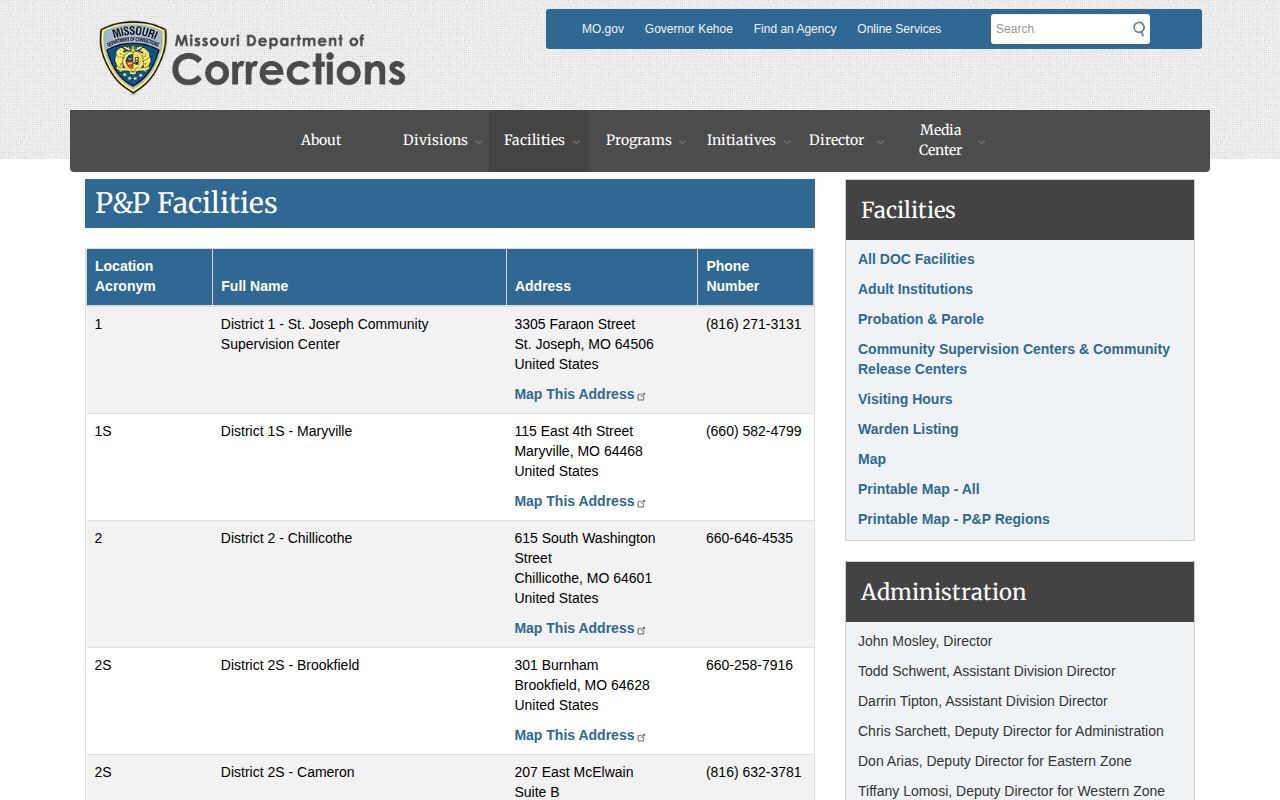
The directory is the assignment check, not proof that a person reports to the office nearest a Texas County home address.
Important: Absence from the active DOC search does not prove that probation or parole ended. Confirm discharge with the agency record.
Texas County Parole Office Assignment
Residence in Houston, Licking, or another Texas County community does not by itself identify the supervising office. Assignments can change. A specialized unit or a case-related decision may also control. Search the active DOC record first, then use the directory. This avoids sending a status question to an office selected only because it appears geographically close.
Missouri DOC Supervision Contacts
Division of Probation and Parole
Office assignments: official field-office directory
Status routing: DOC Contact Us and Offender Inquiry
Parole decisions: Missouri Parole Board
The inquiry should identify the person accurately and ask one clear question. Public staff may be unable to provide private schedules, treatment information, or protected case details. A useful request asks whether the public record still reflects active Missouri supervision and which public office should receive a follow-up. It should not ask the Texas County Sheriff to interpret a DOC status.
The path differs for someone still at South Central Correctional Center. Institution staff or the caseworker handle prison-status questions before release. Once a person is released into active supervision, the assigned field officer becomes the proper source. The change in contact reflects a change in custody, not a new county jail record.
Texas County Parole Hearing Records
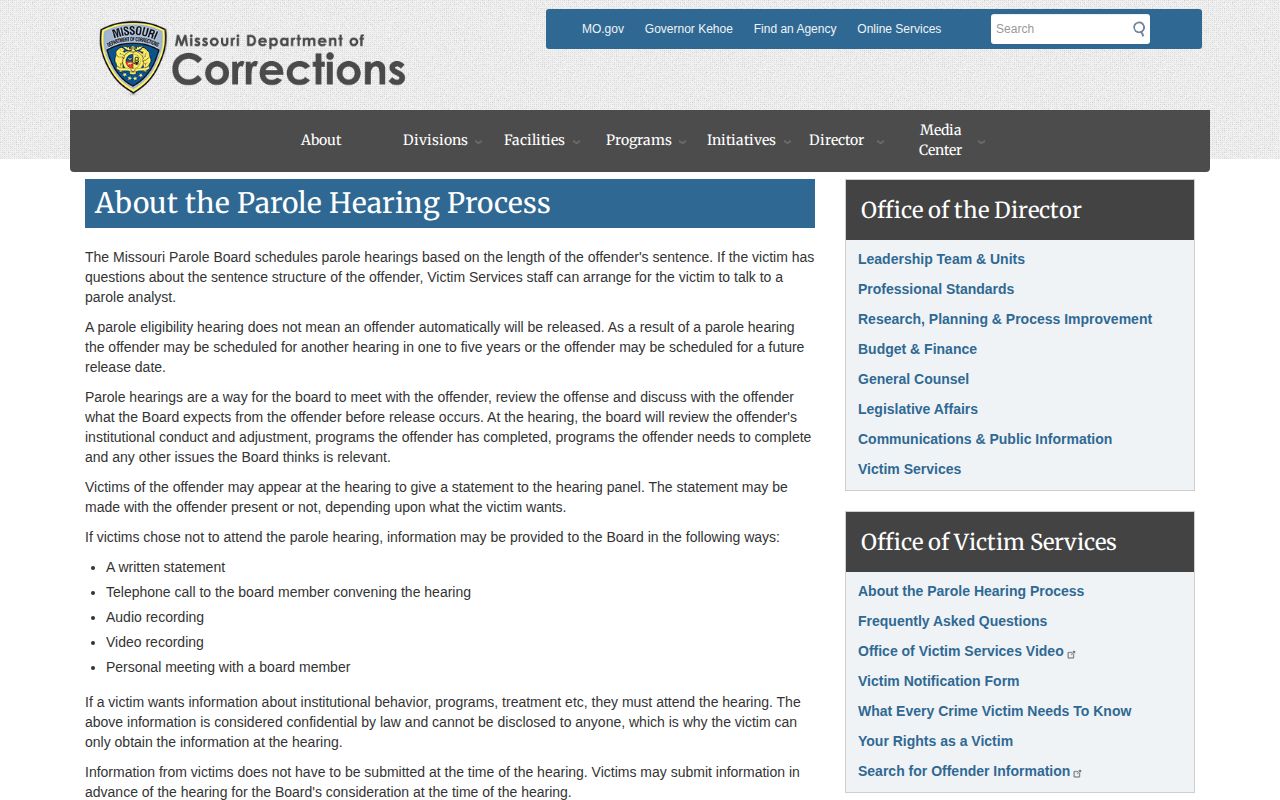
Missouri does not publish a simple Texas County month-by-month parole calendar like a local court docket. Hearing timing follows the person, sentence, institution, current law, and Parole Board rules. The official hearing process says a result can set another hearing in one to five years or assign a future release date. A decision normally takes eight to twelve weeks. Neither event proves that the person walked out of prison.
The Missouri Parole Board hearing-process page illustrates the official route and the distinction between consideration and release.
A future date can remain contingent on institutional conduct, an acceptable release plan, detainers, programming, and final processing.
Terms must remain exact. A denial or next-hearing setting does not grant parole. A continuance or deferment delays consideration or decision. Rescission can withdraw an expected action. For an individual, verify the current board notice through the institutional caseworker or board channel, then verify actual release through the DOC status and release record.
Eligibility is sentence-specific. Section 217.690 and current parole rules work with offense-specific provisions and minimum-term law. Missouri’s often repeated 85-percent phrase does not apply to every sentence. The judgment, offense date, conviction statute, prior commitments, and current law control.
Texas County Probation Violations
Conditions are the rules attached to an active supervision order. The exact conditions belong to the court or DOC case, not to a generic list. A violation allegation can lead to agency action, a warrant, a court proceeding, or a revocation process, depending on the status and authority involved. A docket entry may explain a court action, while DOC records address supervision. Both should be checked when the public facts seem inconsistent.
An absconder label is not a release type. It may signal alleged noncompliance or that the supervising authority cannot locate the person. No official Texas County Sheriff absconder list was found in the research. A stale post or unofficial wanted page should never be treated as proof of a current warrant. Verify the warrant with the issuing court or agency and verify the supervision record with DOC.
MOVANS can send custody or court-event notifications when the relevant source and event participate. It is not a live probation log. A notice can be delayed by source entry or communications, so a direct agency check remains necessary when the timing matters.
Note: A parole, probation, or absconder label describes supervision status; it does not state the legal reason for the earlier jail departure.
Correct Texas County Supervision Records
Record corrections follow the agency that created the disputed field. An error in the Texas County Jail booking or movement transaction goes to the Sheriff’s Office. A mistake in a docket or judgment goes through the Circuit Clerk and court process. A parole, probation, assigned-office, or DOC release-date issue goes to Missouri DOC. A VINE display may depend on the agency feeding the event.
The Justice Center places sheriff and court functions in the same building, but co-location does not merge the records. Bring the signed order, agency notice, or other source document to the correct custodian and identify the precise field that conflicts. That keeps a correction request narrow and helps the office compare the source record rather than guess which system should change.
For a state correctional record, the DOC contact channel can route a general inquiry. Specific status remains a caseworker or field-officer question. If a VINE notice conflicts with the sheriff or DOC record, first confirm the custody event with the source agency, then ask how its corrected data reaches MOVANS.
Texas County Supervision Discharge
Release from a jail or prison does not equal discharge from supervision. A person may be physically free from the institution yet remain on probation, parole, or conditional release. Final discharge is the recorded end of the sentence or supervision recognized by the responsible agency. The exact record label controls.
The active-only DOC search excludes discharged offenders, so it cannot serve as a complete discharge archive. Missouri DOC’s nightly Sunshine database covers people currently or previously under DOC supervision and includes documented completion and sentence-date fields. The agency warns that the working file can contain incomplete, converted, self-reported, or inaccurate data. Use it as a research lead, then request the individual release or discharge record when a firm answer is needed.
Court records can add context. A probation judgment, revocation, amended order, or later docket event may explain why a state record changed. The court record does not replace the state discharge record, just as a parole decision does not replace proof of actual prison release. For the broader released-person record path, use the Texas County released inmate search and confirm each event with its source custodian.