
Texas County Projected Versus Actual
A projected date is an agency calculation or tentative release point based on facts known at the time. An actual date records what occurred. The two can differ because a court amends a judgment, a detainer remains active, sentence credit changes, the Parole Board acts, or another case affects custody. A projected date should never be reported as a promise.
Pretrial detainees are different. A person held at the Texas County Jail while a case is pending may have bond terms or a scheduled court event, but those facts do not create a guaranteed jail release date. A bond order may precede departure, and another hold may prevent release. The sheriff’s movement record is needed to confirm when the person actually left and whether the destination was the community or another custodian.
A sentenced county-jail inmate may have a calculated date based on the written judgment and applicable credit. A person committed to Missouri DOC moves into the state sentence system. The state record can use several different date concepts, and each label must be read on its own terms.
Scheduled versus actual: A future date is a planning field. Only the responsible jail or DOC release record confirms physical departure and destination.
Find Texas County Inmate Release Dates
Start with custody, not with arithmetic. The Texas County Jail at the Texas County Justice Center is a county facility. South Central Correctional Center is a Missouri DOC prison. Their records, release rules, and contact paths are not interchangeable. If the sheriff moved a person to state prison, the local departure is a transfer and the later prison release belongs to DOC.
- Search the Texas County case in Case.net and read the judgment, sentence, and later docket entries.
- Determine whether the person remained on a county sentence or was committed to Missouri DOC.
- For a county sentence, ask the Texas County Jail how it calculated the scheduled release, including jail credit.
- For a state sentence, search the Missouri DOC Offender Web Search and quote the exact public date label.
- Read the statute and sentence rules that apply to the actual conviction rather than using a general percentage.
- Ask the institutional caseworker, field officer, or DOC Constituent Services to clarify a public field.
- Confirm departure through an actual release record or custody-status change.
The Texas County Circuit Clerk says a 25th Judicial Circuit search reflects entries in real time once clerk staff enter them, while an “All Participating Courts” search may lag. Even the local circuit view records court action, not movement through the jail door. Match it to the sheriff or DOC record.
For the full county release-record path, the Texas County released inmate search explains how a court event and custody record corroborate each other.
Texas County Release Date Vocabulary
Missouri’s official terms are more reliable than a generic countdown. The Missouri DOC glossary defines a minimum prison term, minimum release date, and presumptive parole release date as separate concepts.
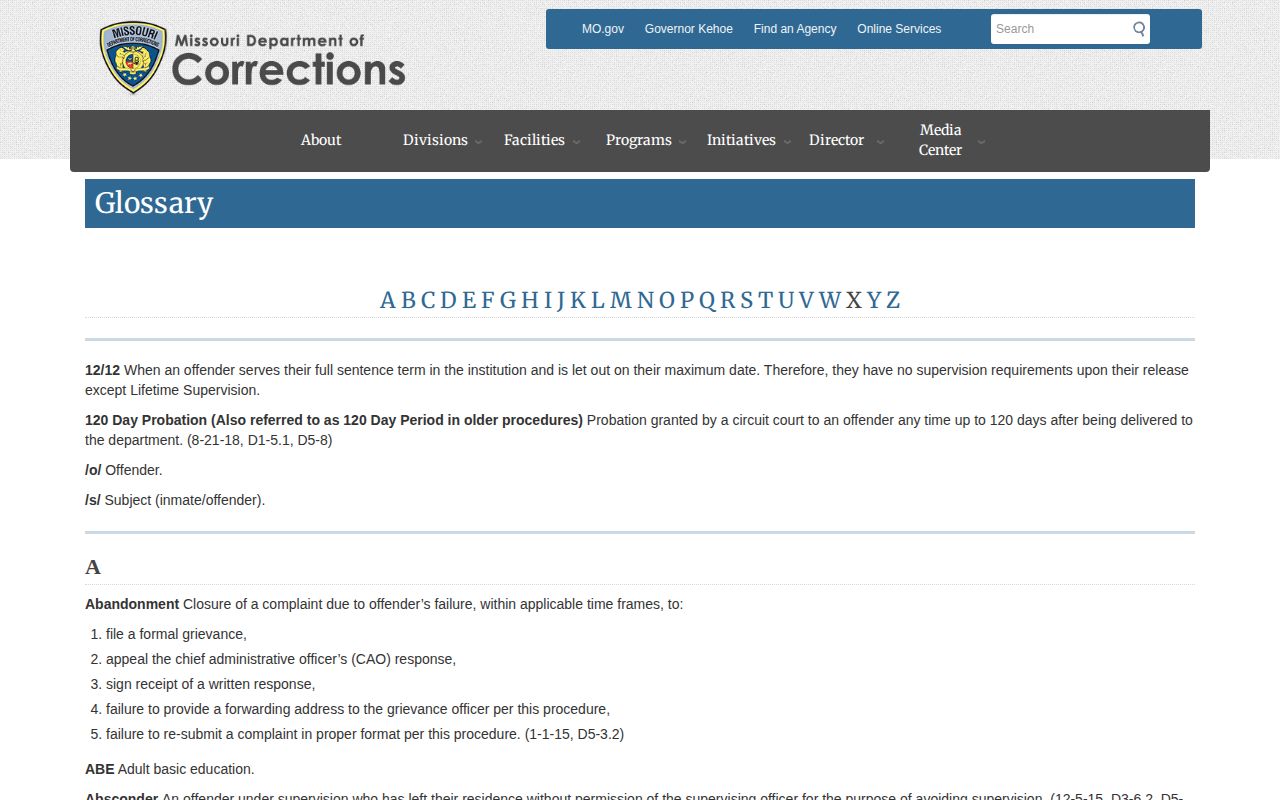
The glossary helps prevent a tentative board date from being mistaken for a completed release.
- Minimum prison term
- The time required by statute before eligibility for parole, conditional release, or another early-release path.
- Minimum release date
- The term DOC uses for the conditional-release date.
- Presumptive parole release date
- A tentative Parole Board date contingent on appropriate institutional behavior and an acceptable release plan.
- Actual release date
- The date the responsible custodian records the person as leaving under a stated release or movement type.
A minimum term concerns eligibility, not a promise of release. A minimum release date has a defined conditional-release meaning. A presumptive date remains tentative. These distinctions are especially important for a person at South Central Correctional Center, where prison and parole records belong to Missouri DOC rather than the Texas County Sheriff.
Texas County publishes no local jail good-time formula, fixed release hour, or rule that moves a weekend release to Friday. That absence is part of the answer. State vocabulary can clarify a DOC field, but it cannot be imported into a county-jail calculation. Ask the jail to explain the judgment and credit it used for the named county sentence.
Not every public result displays the same field. The research pass could not lawfully verify a universal “projected release date” label for all Missouri records. If the field is absent, do not manufacture a date from sentence length. Ask the caseworker or DOC contact to explain what public information can be confirmed.
Texas County DOC Release Fields
The active Offender Web Search and the nightly DOC Sunshine database answer different release-date questions. The point search covers active offenders, including people in prison and people on parole or probation. It expressly excludes discharged offenders. A person released from South Central Correctional Center into active parole may therefore remain searchable, while a person whose DOC sentence has fully ended may disappear from that public point search.
The Sunshine database is broader and more archival. Its documented FAK930 layout includes DOC ID and identity data, assigned place, institution or field function, offense and sentence county, charge description, sentence date, a completed flag, sentence minimum release date, sentence maximum release date, prison-sentence length, and probation date, type, or term. One person can have several rows because the file is organized by charge. Special date codes can also mark life, indeterminate or interstate, and court-assessment situations.
Those fields are research leads, not a certified calculation for one person. DOC warns that the file may be incomplete or inaccurate, that some information is self-reported and unverified, and that conversions from older systems affect historical data. Preserve the documentation with any extracted row. Then ask for an individual DOC record when the distinction among minimum, maximum, completed, and actual discharge dates must be resolved.
Missouri Sentence Release Rules
Missouri release calculations can involve the judgment, offense date, sentence length, concurrent or consecutive structure, jail-time credit, sentence-specific limits, Chapter 217, and Parole Board rules. The calculation cannot be reconstructed from a name and a sentence total alone. Amended judgments and later cases can alter the inputs.
The current text of section 558.019 contains minimum-prison-term provisions for defined categories, including covered dangerous felonies and qualifying prior commitments.
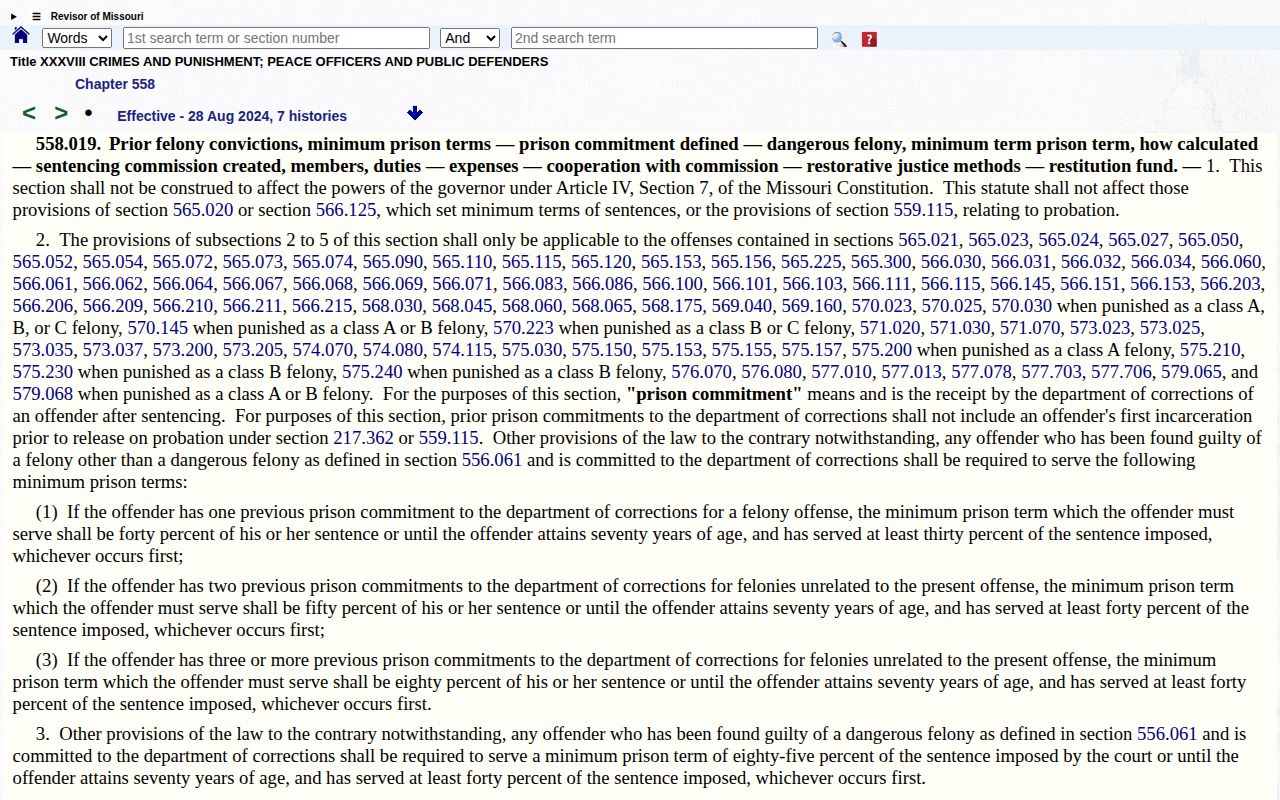
The statute shows why the widely repeated 85-percent rule cannot be applied to every Texas County sentence.
Whether a minimum applies depends on the offense, conviction, offense and sentencing dates, prior commitments, and current statutory category. Some convictions use separate restrictions. A responsible check begins with the signed judgment and the statute tied to that judgment. It does not apply 85 percent across the board.
The current section 558.011 provides sentence-class and conditional-release structure relevant to many calculations.
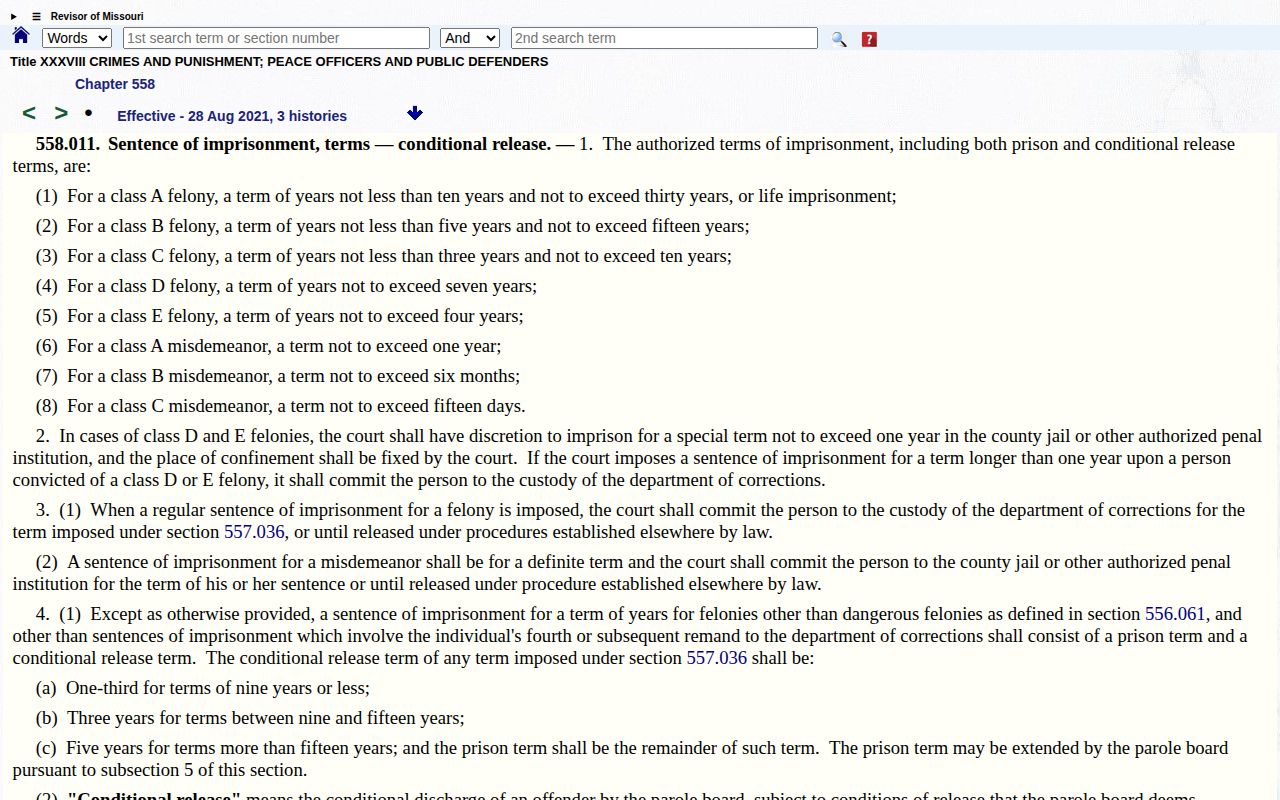
Read this structure together with the conviction, judgment, and any more specific release restriction.
Section 558.041 addresses possible additional credit for eligible DOC prisoners under recommendation, department policy, conduct and program rules, and loss provisions. It is conditional and discretionary. Section 217.703 concerns eligible community-supervision credits, which are not the same as prison-time credit. Mixing these rules can produce a false date.
Texas County Good-Time Calculation
Good time or earned credit is not a simple balance that a reader can subtract from the sentence. Missouri law and DOC policy determine who is eligible, what conduct or program rules apply, whether credit can be lost, and which part of custody or supervision it affects. A calculated date may move in either direction as the agency updates sentence facts and credit.
County-jail calculations require a separate check. No public Texas County Jail good-time policy was found. There is no researched basis for publishing a one-for-two formula, a fixed release hour, or an automatic weekend adjustment. Obtain the written judgment and ask the jail which credits it applied to that specific county sentence.
A useful inquiry identifies the person and case, asks for the scheduled release date, and requests the calculation components that are public. It can ask about credited jail days, the judgment used, and any applicable local or statutory credit. If the date falls on a holiday or weekend, call the jail. The research found no Texas County rule that guarantees an earlier Friday release.
Note: Administrative office hours do not establish when jail releases occur, and they do not prove that sentence releases stop on weekends.
Why Texas County Release Dates Change
Each date depends on the record then available. A later event can change either the calculation or whether release occurs on the expected day. The event should be verified with the agency that owns it.
| Factor | Possible effect | Source to check |
|---|---|---|
| Jail-time credit or amended judgment | Changes the sentence inputs | Sentencing court and DOC or jail calculation |
| Concurrent or consecutive sentences | Changes how terms combine | Judgment and DOC sentence record |
| Detainer, warrant, or new case | Can block community release or cause transfer | Holding agency, court, and receiving custodian |
| Discipline or credit change | May alter an eligible calculated date | DOC caseworker and controlling policy |
| Parole Board action | Can set, defer, deny, or rescind a future release action | Current board notice and caseworker |
| Release plan or programming | Can affect a contingent parole date | Institutional caseworker and Parole Board record |
| Transfer | Ends custody at one building but continues it elsewhere | Movement record and receiving agency |
Escape time, revocation, and sentence-specific restrictions can also affect the apparent date. A table can identify common categories, but it cannot calculate an individual release. Confirm the current field with DOC or the Texas County Jail, then check for a receiving agency before calling the event a community release.
Confirm Texas County Actual Release
A projected date answers when release may occur under current assumptions. An affirmative release record answers what actually happened. For a Texas County Jail departure, ask the Sheriff’s Office for the booking and release or movement transaction. Request the date and time, release type, authority, remaining holds, code definition, and receiving agency if transferred.
For a Missouri prison release, an active Offender Search record can show ongoing incarceration or supervision, but it excludes discharged offenders. A person paroled or conditionally released may remain visible as active. For final discharge, use the DOC Sunshine historical database as a lead and submit a focused DOC request. The database includes documented minimum and maximum sentence-date fields and a completed flag, but DOC warns that its working data may be incomplete or inaccurate.
MOVANS can supplement confirmation with a custody-change alert. It does not certify the legal reason, exact destination, every hold, or the sheriff’s departure time. The VINELink Release Check explains how to register for the event options currently offered in Missouri.
When the answer matters, preserve the date on which each source was checked and quote the exact label. Then reconcile the court event, custody record, and transfer destination. That method can show both why release was expected and whether the person actually left legal custody.